Your basket is empty.
This magnetic sheet is thinner than the vehicle grade magnetic and is better suited to internal uses, such as fridge magnetics or retail environments.

Behind the prints insights, inspiration and innovation
This magnetic sheet is thinner than the vehicle grade magnetic and is better suited to internal uses, such as fridge magnetics or retail environments.
Adding a laminate finish to your printed material serves multiple purposes beyond mere aesthetics. Each lamination type offers distinct characteristics that affect both the appearance and functionality of your final product.
This option applies a soft, smooth finish that reduces glare and fingerprint visibility. The matt laminate creates a sophisticated, understated appearance that many find easier to read under varied lighting conditions. Beyond its visual qualities, this laminate incorporates UV protection that significantly reduces colour fading over time, extending the life of your printed materials. This option is particularly well-suited for items that will be displayed in brightly lit environments like exhibitions or those requiring a more professional, subdued appearance.

When you select this option, your print receives a shiny, glass-like finish that enhances colour vibrancy and creates a striking visual impact. Colours appear more saturated and dynamic under this treatment. Like the matt option, gloss laminate includes UV protection to prevent fading, ensuring your vibrant colours remain impressive over time. This finish works exceptionally well for photographic images or designs where you want colours to "pop" with maximum visual impact.
Our LED Light Kit is designed to turn your SEG Pop Up into a vibrant illuminated display. The tool-free system clips directly into the frame, evenly lighting both the front and back to enhance colour, depth, and visibility—perfect for exhibitions, events, and retail environments where you want your graphics to stand out.

Add our tool-free LED Light Kit to transform your SEG Pop Up into a striking illuminated display. The LED modules clip directly into the frame and evenly light both the front and back of the system. When selected, we upgrade your graphics from blockout fabric to our soft backlit material, allowing your artwork to glow with rich colour and enhanced visibility—perfect for busy exhibition halls and retail environments.

Your SEG Pop Up is supplied with blockout fabric faces, delivering bold, vibrant graphics under standard exhibition or retail lighting. This option is ideal if you want a lightweight, high-impact display without internal illumination, or if lighting is already provided by the venue.
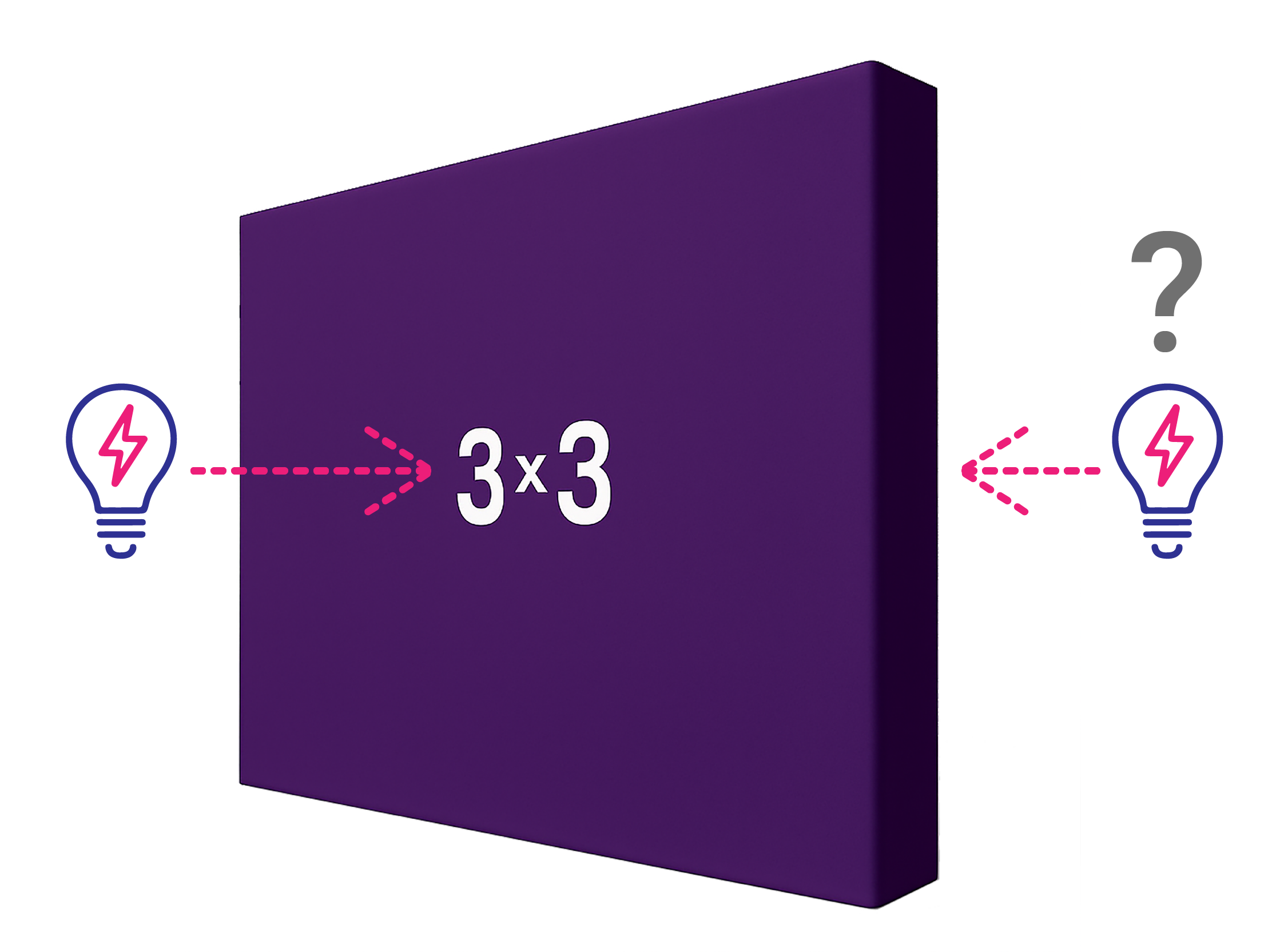
When you choose Double-Sided and add the LED Light Kit, you’ll unlock an extra option for the reverse graphic:
Backlit – illuminated on both sides for maximum impact
Blockout – illuminated on the front only, with a solid non-lit reverse
This lets you tailor the display depending on positioning, budget, or branding needs.
Here is where we are asking if you'd like to specify panel layouts when your project is larger than one piece of material, also known as Tiling.
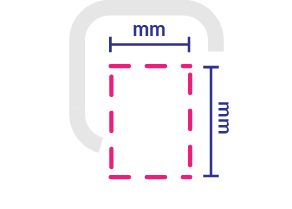
This is the size we (or you) give to each panel. In the dropdown, the top one or two options show you how many panels you'll receive and if they will be landscape or portrait. We also show you here the size of each panel with them all as equal sizes.
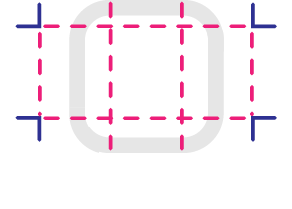
This allows you the choice to 'tile' your finished size in columns and rows. You can choose the number of columns across and the number of rows high. Again, here you will get equal panel sizes.
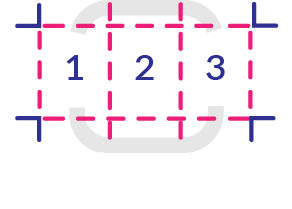
This very simply tells you how many panels you can expect.
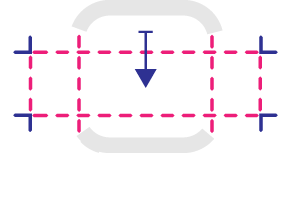
When you select 'custom sizes', we allow you to be much more specific and even upload a sketch. Very handy if you need to control the sizes or even specify gaps or window frames. To calculate the shipping, we need you to enter here the largest panel size and number of panels. This is so that we can calculate the shipping costs. Please be honest to avoid delays due to under-charged shipping.
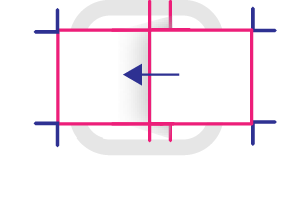
For items like wallpaper or vinyl, we would usually apply a 20mm overlap whereas for rigid panels the panels would butt together. If you have a special requirement, then please complete the notes section and we will contact you if we have any questions.
When considering how your fabric graphic will be installed and displayed, the edge finishing method plays a crucial role in both functionality and appearance. Each option offers different advantages depending on your display system and installation requirements.
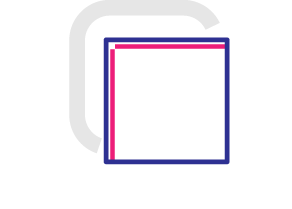
This finishing method involves sewing a flexible silicone strip to the edge of your fabric using our Overlock Sewing Machine. When inserted into the corresponding channel of an SEG (Silicone Edge Graphic) frame, this creates a drum-tight, professional display with clean, frameless appearance. The silicone edge fits perfectly into the frame channel, allowing for easy installation and removal while maintaining constant tension across the entire graphic.
We offer two standard sizes:
• 14mm x 3mm: Compatible with most aluminium profiles, Aluvision or BeMatrix frames
• 10mm x 3mm: Specifically designed for the Tecna T3 Exhibition System
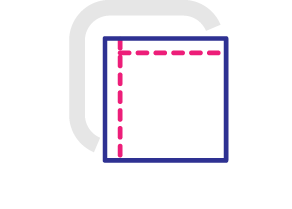
For installations requiring frequent changing or where flexibility is needed, we can sew Velcro to the perimeter of your fabric graphic. This method allows for quick mounting to compatible surfaces and simple repositioning as needed. We can supply self-adhesive male/female Velcro for your mounting surface if required – simply add a note with your specific request during ordering.
Velcro edging works particularly well for temporary installations, curved surfaces, or situations where the mounting surface may vary. The hook-and-loop system provides secure attachment while allowing for easy graphic changes without tools or specialist knowledge.
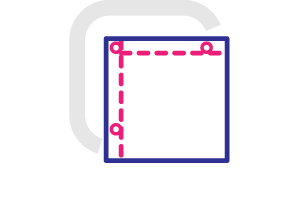
This traditional finishing method combines a sewn hem with metal eyelets positioned every 500mm around the perimeter. This creates multiple secure fixing points for attaching your graphic using cable ties, rope, or bungee cords. For Heras fencing applications, we reinforce the hem with material webbing for added durability in outdoor environments.
The hem and eyelet approach offers exceptional versatility and strength, making it ideal for outdoor banners, construction site graphics, and any situation where graphics might be exposed to wind or weather. The multiple fixing points distribute tension evenly, helping your graphic to remain taut and visually appealing even in challenging conditions.
When selecting the edge finishing for your banner, the right option enhances both functionality and longevity. Each finishing method serves specific installation needs and environmental conditions your banner might face.
This clean finishing technique involves folding the edge of your banner material back on itself and securing it with a strong, weather-resistant stitch. The hem reinforces the banner edges, preventing fraying and tearing while providing a neat, professional appearance. This option is ideal for indoor displays or situations where the banner will be mounted to a flat surface using tape, adhesive, or wall fixtures. Hem-only finishing creates a sleek, borderless look without visible mounting hardware, perfect for retail environments, exhibition backdrops, or any setting where aesthetic cleanliness is paramount.
Combining a reinforced hem with metal eye-lets positioned at regular intervals (typically every 500mm) around the perimeter, this finishing method offers exceptional versatility for mounting. The sturdy metal eye-lets create secure anchor points for attachment using bungee cords, rope, cable ties, or hooks. This option provides superior wind resistance for outdoor applications, as the multiple fixing points distribute tension evenly across the banner surface. The hem reinforces the banner edge, while the eye-lets ensure your banner remains taut and visually striking even in challenging weather conditions. Ideal for construction site hoardings, outdoor events, building wraps, and any situation requiring a robust, secure installation.
This versatile edge finishing involves sewing Velcro tape along the perimeter of your banner, creating a quick-attach mounting system. This approach is particularly valuable for situations requiring frequent repositioning or removal of the banner. The hook-and-loop system provides secure attachment while allowing for easy changes without tools or specialist knowledge. Velcro edges work exceptionally well with compatible display systems and for temporary installations where speed of setup and dismantling is crucial. This option combines convenience with a clean appearance, as the attachment mechanism remains hidden when mounted. Particularly suited for exhibition stands, retail displays with regular graphic changes, or modular display systems.
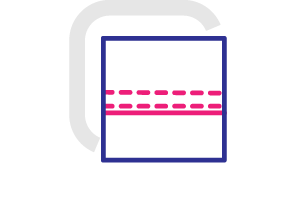
This specialised finishing creates fabric tunnels along selected edges of your banner, designed to accommodate supporting poles or rods. Typically applied to the top and bottom edges, these pockets allow the banner to be suspended from horizontal supports while maintaining tension across the graphic area. The pole pockets distribute weight evenly, preventing sagging and ensuring your message remains clearly visible. This option is ideal for hanging displays, exhibition stands using pole systems, retail environments, and outdoor applications where the banner needs to span across an open space. The poles provide structural rigidity, helping your banner maintain a flat, readable surface even when subjected to air movement or changing conditions.
We offer two quality tiers of custom wallpaper, each available in five distinct finishes to suit your specific project requirements.

Our standard wallpaper is designed for medium-traffic commercial spaces and public areas. It features:
• Non-woven fabric backing ensuring stability with no shrinkage or stretching
• Easy repositioning during installation
• Euroclass EN13501 fire safety compliance
• Washable, scratch-resistant surface
• Printed using UVgel ink tech
• Ideal for feature walls, interior branding, and custom wall murals

Our premium wallpaper is engineered for high-traffic commercial environments including retail, hospitality, healthcare, and offices. This heavyweight 350gsm option offers:
• Fabric backing for exceptional durability
• Enhanced ink-receptive coating for superior print quality
• Built-in antibacterial protection
• Euroclass EN13501 fire safety compliance and CE certification
• A+ VOC rating (low emissions)
• Suitable for luxury interiors, healthcare settings, and high-humidity environments like spas
Both options deliver outstanding print quality and professional results, with the premium option providing additional durability and protection features for demanding environments.
When creating feather flags for your outdoor promotion or event, the visibility of your message from different angles is an important consideration. We offer two distinct printing approaches to meet your specific display needs.
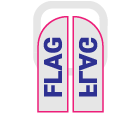
With this option, we print your design on one side of the flag material. Due to the nature of the lightweight fabric used for feather flags, your image will bleed through to the reverse side. This means viewers on the opposite side will see a mirror image of your design (text appearing backwards).
This option is more economical and works perfectly for designs without text or where the flag will primarily be viewed from one direction. Single-sided printing also maintains the lightweight properties of the flag, allowing it to move freely in the breeze for maximum visibility and motion appeal.
This is our most popular option for location markers, directional signage, and decorative flags where text legibility from both sides isn't critical.
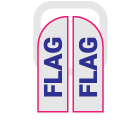
For situations where your message must be correctly readable from any angle, our double-sided option creates a truly dual-faced display.
We print two separate pieces of flag material and sew them together with a light-blocking liner in between. This construction ensures that each side displays its intended design in the correct orientation, with text reading properly from either direction.
The light-blocking middle layer prevents any image bleed-through, maintaining perfect colour fidelity and clarity on both sides. While this construction is slightly heavier than a single-sided flag and represents a higher investment, it provides a professional-grade presentation for promotional messaging that needs to be effective from multiple viewing angles.
Ideal for trade shows, retail forecourts, and any location where your flag might be approached from various directions.
Here is where we are asking if you'd like to specify panel layouts when your project is larger than one piece of material, also known as Tiling.
This is the size we (or you) give to each panel. In the dropdown, the top one or two options show you how many panels you'll receive and if they will be landscape or portrait. We also show you here the size of each panel with them all as equal sizes.
This allows you the choice to 'tile' your finished size in columns and rows. You can choose the number of columns across and the number of rows high. Again, here you will get equal panel sizes.
This very simply tells you how many panels you can expect.
When you select 'custom sizes', we allow you to be much more specific and even upload a sketch. Very handy if you need to control the sizes or even specify gaps or window frames. To calculate the shipping, we need you to enter here the largest panel size and number of panels. This is so that we can calculate the shipping costs. Please be honest to avoid delays due to under-charged shipping.
For items like wallpaper or vinyl, we would usually apply a 20mm overlap whereas for rigid panels the panels would butt together. If you have a special requirement, then please complete the notes section and we will contact you if we have any questions.
Here is where we are asking if you'd like to kiss cut your vinyl.
Kiss cutting is a precision cutting process used for self-adhesive vinyl graphics and stickers. The blade cuts cleanly through the vinyl layer only, without cutting through the backing liner, allowing the finished design to be peeled away easily. This makes kiss cutting ideal for logos, lettering, decals, and custom-shaped stickers that need clean edges and simple application.
Please note that in most cicumstances use our discretion as to whether we apply Application Tape for you. If you have a preference, add a note to the product.
When ordering printed materials for windows or other transparent surfaces, understanding how your design will be viewed is crucial. This simple guide will help you select the right printing option based on where your audience will view your design.
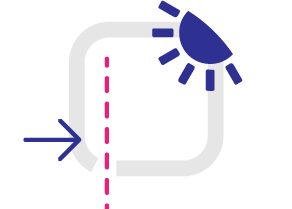
Choose this option when the viewer will primarily be looking at your design from inside the building (like shop staff or office workers). We'll print your design normally, so that text and images appear correctly when viewed from the inside. If viewed from the outside, your design will appear reversed.
Example: A shop hours sign intended to be read by staff from inside the premises.
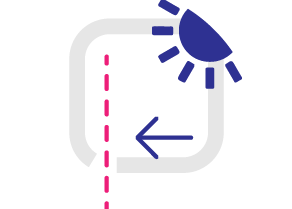
Choose this option when the viewer will primarily be looking at your design from outside the building (like customers or passersby). We'll print your design in reverse, so when applied to the inside surface of the window, it appears correctly to people viewing from outside. If viewed from the inside, your design will appear reversed.
Example: Opening hours or promotional offers meant to be read by people passing by your shop.
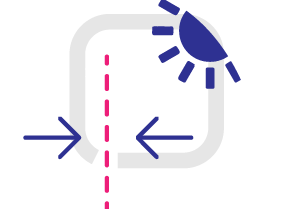
Choose this option when your design needs to be correctly viewed from both inside and outside. We'll add a layer of white ink between two printed layers of your design - one oriented for inside viewing and one for outside viewing. This ensures your message is legible from both sides.
Example: A "Push/Pull" door sign that needs to be read correctly from either side of a glass door.
Note: The "Both Sides" option automatically includes a white ink layer between the two printed designs to prevent them from interfering with each other, ensuring clarity from either viewing direction.
When considering different printing methods, the type of ink used plays a crucial role in determining the durability, appearance, and application possibilities of your final product. Each ink technology has distinct properties that make it particularly suitable for specific materials and intended uses.

These water-based inks offer a unique printing process that creates exceptional results on certain materials. Unlike surface-level printing methods, dye sublimation works through a fascinating chemical process where the ink transforms from a solid directly into a gas when heated (skipping the liquid phase entirely - a process called sublimation).
This gas then permeates the surface of the material, where it cools and reverts to a solid state, becoming part of the material itself rather than simply sitting atop it. This integration with the material creates prints with remarkable durability and colour vibrancy. Dye sublimation produces images with smooth, continuous tones that closely resemble photographic quality. The prints resist fading, cracking, and peeling because the ink doesn't exist as a separate layer that can be damaged. This makes dye sublimation particularly valuable for items that will experience regular handling or outdoor exposure.
The technology works best on polyester-based materials or specially coated surfaces designed to receive the sublimated ink. Common applications include fabric displays, clothing, promotional items, and rigid panels with special coatings.

UVgel technology represents an innovative evolution in UV printing that combines the benefits of traditional UV inks with unique handling characteristics. Unlike conventional UV inks that remain liquid until exposed to UV light, UVgel inks are applied to the substrate in a gel-like state. This semi-solid consistency means the gel dots remain in place without spreading, merging, or being absorbed into porous materials.
Once applied, a UV light source instantly cures and bonds the gel to the substrate, creating a durable, flexible print with exceptional colour accuracy. This distinct application method allows for precise dot placement and outstanding control over detail, producing images with remarkable sharpness and consistency. The gel consistency also results in a thinner ink layer than traditional UV printing, creating a more natural-looking surface with reduced texture while maintaining excellent scratch resistance.
UVgel technology excels in applications requiring both high-quality imagery and environmental durability. The odourless prints are certified for indoor air quality, making them suitable for sensitive environments like healthcare facilities or educational institutions. The combination of precision, durability, and environmental credentials makes UVgel particularly valuable for wallcoverings, retail graphics, and interior décor applications where both appearance and performance matter.
UV inks represent powerful printing technology that cures instantly when exposed to ultraviolet light. These inks begin as a liquid that, when printed onto a surface, remains in place without spreading or absorbing into the material. The moment the UV light activates the photoinitiators within the ink, it triggers a chemical reaction that transforms the liquid into a solid polymer network in a fraction of a second.
This instant curing process creates several significant advantages. The ink doesn't have time to soak into porous materials, allowing for sharp, precise printing on virtually any surface – including traditionally challenging materials like glass, metal, wood, and plastics. The resulting print has outstanding scratch and chemical resistance, making it ideal for applications requiring durability against physical contact or cleaning.
UV inks typically produce a slightly raised texture on the printed surface, which can be either minimised for a flatter appearance or deliberately enhanced to create textured effects. They excel in signage, exhibition graphics, point-of-sale displays, and industrial applications where longevity and resilience are paramount.
These flexible, water-based inks combine the environmental benefits of aqueous formulations with impressive versatility and performance. Latex inks contain tiny polymer particles suspended in a water carrier. When printed, the water evaporates and the polymers form a durable, flexible film that adheres to the surface of the material.
The remarkable elasticity of latex inks makes them particularly suitable for applications that involve bending, folding, or stretching the printed material. Unlike some other ink types that might crack when the substrate is manipulated, latex inks maintain their integrity even when the material is subjected to significant deformation. This flexibility extends their usefulness to vehicle wraps, textile printing, banners, and other applications where the finished product needs to conform to irregular shapes or might experience movement.
Another advantage of latex inks is their environmental profile. They produce minimal volatile organic compounds (VOCs) during printing and curing, making them safer for indoor applications where air quality is a concern. The prints emerge from the printer completely dry and ready for immediate finishing or installation, streamlining production workflows and reducing turnaround times.
When printing with white ink, how it's applied can dramatically affect both the appearance and functionality of your final product. We offer two distinct approaches to white ink application, each suited to different design requirements.
This option applies a complete layer of white ink across the entire printable area of your design. The white layer serves as a uniform foundation beneath your coloured graphics, creating a consistent base that ensures maximum colour accuracy and vibrancy.
By completely separating your design from the material beneath, flood white prevents any influence from the substrate colour, resulting in precisely the colours you intended in your design. This approach is particularly valuable when printing on coloured, transparent, or dark materials where maintaining colour fidelity is crucial.
The comprehensive white layer also creates maximum opacity, ensuring your design stands out boldly even against challenging backgrounds. While this option uses more white ink, it delivers uncompromising colour reproduction and visibility.
Rather than covering the entire design area, spot white selectively applies white ink only to specific portions of your design where it's explicitly needed.
This targeted approach allows for creative effects where some elements receive the opacity and colour-true benefits of white ink, while others interact with the substrate. For example, you might apply white ink behind text and logos to ensure their clarity, while allowing background elements to blend with or show through the material.
Spot white can create striking contrast between opaque and transparent areas when printing on clear materials, or can be used as a visible design element itself. This option typically reduces ink usage compared to flood white, making it both economically and environmentally efficient when full coverage isn't required for your design concept.
When designing printed materials, particularly those on transparent or coloured surfaces, the decision to include white ink can dramatically affect both the appearance and functionality of your final product. Understanding the implications of this choice helps ensure your printed materials achieve the desired visual impact and practical performance.
Including white ink in your printing process opens up several valuable possibilities that significantly expand what you can achieve with your design. This option is particularly important in two key scenarios:
When printing on clear materials for window displays, white ink enables what we call "sandwich printing." This technique positions your coloured design between layers of the transparent material and white ink, creating a display that appears correctly from both sides of a window. Viewers inside and outside the building can see the intended design without the reversed appearance that would typically occur with single-sided printing. This dual-visibility makes sandwich printing invaluable for retail environments, office partitions, and public-facing displays where audience approach may come from either direction.
White ink also plays a crucial role when printing on coloured or dark substrates. Without white ink, your printed colours would blend with the background colour of the material, significantly altering how they appear—imagine printing a yellow design directly onto a blue surface, which would appear green instead. White ink solves this problem in two ways:
As a spot colour, white ink can be used selectively to create white elements within your design that would otherwise be impossible to produce on coloured materials. Think of white text or graphics that need to stand out against a darker background.
As a base layer, white ink can create a neutral foundation beneath your coloured design. By first printing a solid white layer and then applying your coloured design on top, the white acts as a separator that prevents the background colour from affecting how your design appears. This technique ensures colour accuracy and vibrancy, allowing your blues to appear truly blue rather than taking on a purple tint when printed on a red substrate, for example.
The opacity that white ink provides also helps prevent background elements from showing through your printed design, creating a more solid, substantial appearance where desired.
Choosing to print without white ink creates distinctly different effects that may be either advantageous or problematic depending on your design intentions:
On clear materials, omitting white ink results in a transparent, "window-like" appearance where only your coloured elements are visible, allowing light to pass through the unprinted areas. This can create elegant, subtle effects for decorative glass applications, transparent signage, or designs where you specifically want to maintain visibility through portions of the material. The transparency can be particularly effective when the printed item will be backlit or displayed against varying backgrounds.
However, on coloured materials, printing without white ink means your design colours will inevitably interact with the substrate colour. This colour mixing follows the same principles as mixing paints: your printed yellow combining with a blue substrate creates a green appearance. While sometimes this interaction can be deliberately used for creative effect, it often leads to unexpected and potentially undesirable colour shifts. Reds may appear more burgundy, blues might shift toward purple, and lighter colours could become barely visible against darker backgrounds.
Understanding this relationship between ink and substrate colour becomes essential when deciding whether to include white ink in your project, particularly when colour accuracy is important for branding consistency or visual impact.
When considering the timeline for your project, our delivery options allow you to choose a turnaround schedule that aligns with your specific needs. Each option offers a different balance between urgency and cost, giving you control over when your finished product will be ready.

For projects with pressing deadlines, this premium option reduces your product's standard turnaround time by two full business days. This significant acceleration is ideal when time truly is of the essence—perhaps for upcoming events, last-minute marketing needs, or unexpected opportunities. This option prioritises your order in our production queue, ensuring it receives immediate attention. While this expedited service carries an additional cost, the value lies in having your materials in hand significantly sooner than the standard timeline would allow.

This moderate acceleration option strikes a balance between urgency and cost-effectiveness. By reducing your turnaround time by one business day, it provides a meaningful improvement to your timeline without the premium associated with our fastest service. This option works well for projects that have some time sensitivity but not an extreme rush. Many customers find this "middle path" provides just enough acceleration to meet their needs while keeping additional costs reasonable.

Our standard delivery option follows the regular production timeline specified in the product description. This timeline represents our normal production flow and offers the most cost-effective approach to receiving your order. For projects with typical planning horizons, this option provides reliable delivery without rush charges. The specific lead time varies by product type and complexity, so you'll always see the expected timeframe clearly displayed in the product description before making your selection.
When your project timeline has some flexibility, this option extends your delivery by one business day in exchange for a modest reduction in cost. This can be an excellent choice for projects planned well in advance or those working within tight budget constraints. By allowing us slightly more scheduling flexibility, you receive the same quality product at a more economical price point, embodying the wisdom that good things indeed come to those who wait.
When you're ready to provide your design files for production, you have flexibility in how and when you submit your artwork. This choice allows you to proceed at a pace that works best with your project timeline and preparation needs.

If your artwork isn't quite finalised or you need additional time to perfect your design, this option allows you to proceed with your order while postponing the artwork submission. This flexibility can be valuable when you're still finalising design elements or awaiting approval from stakeholders. However, it's important to understand that selecting this option may affect the overall production timeline. Our approximate turnaround times are calculated from the point when we receive complete, print-ready artwork, so any delay in providing your files will naturally extend your project completion date.

For projects where your design files are prepared and ready for production, this option allows you to immediately submit your artwork as part of the ordering process. This is the most efficient path, as it enables our team to begin processing your order without delay. When uploading your files directly, you'll use our secure upload interface that guides you through the submission process.
If you encounter any questions regarding file preparation, formatting requirements, or other artwork concerns, our knowledgeable team is available to assist you. You can reach us by phone at 01825 872040 for personalised guidance.
For particularly large files that might exceed standard upload capabilities, we offer an alternative submission method through our dedicated WeTransfer channel.
When deciding on the presentation of your printed material, one fundamental consideration is whether you require printing on one side or both sides of your product. This choice significantly impacts both the functionality and value of your finished item.
With this option, your chosen design will be applied to only one side of the product, leaving the reverse side blank. Single-sided printing is particularly suitable for items that will be mounted against a wall or surface, where only one side will be visible to viewers. This option is often more economical while still delivering the visual impact you need for many applications. Examples where single-sided printing excels include wall displays, mounted signage, and certain types of promotional materials where the back side remains unseen.

Selecting double-sided printing means both sides of your product will display printed content, maximising the available space for your visual communication. This option requires you to upload separate images for each side—labelled as Side A and Side B in our system. It's important to note that even if you intend to use identical imagery on both sides, you must still upload the same image twice, once for each side designation. Double-sided printing is particularly valuable for freestanding displays, hanging signs, dividers, or any application where your printed material might be viewed from multiple angles or positions.
Adding a laminate finish to your printed material serves multiple purposes beyond mere aesthetics. Each lamination type offers distinct characteristics that affect both the appearance and functionality of your final product.
This option applies a soft, smooth finish that reduces glare and fingerprint visibility. The matt laminate creates a sophisticated, understated appearance that many find easier to read under varied lighting conditions. Beyond its visual qualities, this laminate incorporates UV protection that significantly reduces colour fading over time, extending the life of your printed materials. This option is particularly well-suited for items that will be displayed in brightly lit environments like exhibitions or those requiring a more professional, subdued appearance.
When you select this option, your print receives a shiny, glass-like finish that enhances colour vibrancy and creates a striking visual impact. Colours appear more saturated and dynamic under this treatment. Like the matt option, gloss laminate includes UV protection to prevent fading, ensuring your vibrant colours remain impressive over time. This finish works exceptionally well for photographic images or designs where you want colours to "pop" with maximum visual impact.

This specialised gloss laminate transforms your printed material into a functional writing surface. The finish allows you to use dry-erase markers directly on the surface and then wipe them clean with a dry cloth, leaving no ghosting or residue. This makes it ideal for interactive displays, planning boards, educational materials, or any application where you need to add temporary notations to a permanent printed background. The functionality of this laminate opens up numerous possibilities for creating reusable printed materials.

This robust, glossy laminate offers exceptional protection against vandalism and environmental contaminants. Its special formulation allows for easy cleaning of marker pens, spray paint, and other common defacing materials without damaging the printed surface underneath. This makes it particularly valuable for outdoor displays, public information boards, or any printed materials installed in areas with public access where protection against intentional damage is a concern.
When considering how your printed material will be finished, the trimming details can significantly impact both the visual appeal and functionality of your final product. These options relate to the perimeter of the product.
Here are your available options:
This is the most straightforward option, where your print is simply trimmed along straight edges, creating a conventional rectangular or square shape. This clean, traditional finish works excellently for standard displays and is particularly suitable when your design extends to the very edges of the material.
This option offers a middle ground between the simplicity of square cuts and full customisation. Using our dedicated tool, you can specify the exact radius (measured in millimetres) for the corners of your print. Rounded corners not only provide a softer, more approachable aesthetic but can also be practical for applications where sharp corners might be a concern, such as in public spaces or children's environments.
To use Rounded Corners, first select Square Cut, then the Corner Radius field will be shown.
For designs requiring more creative freedom, this option allows you to define your own cut path using a "Through Cut" line within your artwork. This means your print can take virtually any shape you desire—whether that's curved edges, intricate patterns, or completely custom silhouettes. To implement this effectively, you'll want to consult our ARTWORK PREPARATION GUIDE, which contains detailed instructions for properly setting up your custom cut path in your design file.
On self adhesive vinyl, you can add a kiss cut to any of the trimming options above, so you can have both a shaped perimeter and a kiss cut if you would like to.
If you have specific requirements, add a note.
When your project spans multiple pieces of material, you'll need to consider how these pieces fit together. Here's where you can specify your panel layout preferences, also known as tiling.
The dimensions for each panel. The dropdown shows how many panels you'll get and their orientation (landscape or portrait), along with the equal size dimensions for each panel.
Choose how to 'tile' your finished size with equal panels. Select the number of columns across and rows high to create your grid arrangement.
A simple count of how many panels you'll receive for your project.
When selecting 'custom sizes', you can be more specific or upload a sketch - useful for controlling sizes or adding gaps/frames. For shipping calculations, we need the largest panel size and total panel count. Please be accurate to avoid shipping delays from incorrect charges.
For wallpaper or vinyl, we typically apply a 20mm overlap, while rigid panels are designed to butt together. For special requirements, please add details in the notes section and we'll contact you with any questions.